 Email: boslonmaterials@gmail.com
 Telephone: (+86)15988398565
 en
 русский
 Français
 Português
 عربى
 Español
 REQUEST A QUOTE
 SEARCH

PVC Marble Wall Panel Guide: How to Judge Surface, Thickness, and Waterproofing
A PVC marble wall panel is a decorative PVC wall sheet with a printed or coated marble-effect surface. To evaluate it properly, look past the catalogue image. Check the print and protective coating, the measured thickness and tolerance, and how the panel, edges, and joints behave when water reaches the wall. These three points determine whether the finished wall looks consistent and whether the installation suits a dry feature wall, a bathroom splash zone, or a frequently cleaned commercial interior.
Key checks before approval: surface pattern repeat and gloss under real lighting, nominal versus measured thickness, edge treatment, joint and sealant detail, substrate waterproofing, and batch-to-batch colour consistency.
- A product described as waterproof does not automatically make the complete wall assembly waterproof.
- A thicker panel can improve rigidity, but it also adds weight and may change fixing requirements.
- A convincing marble print on one small sample can fail across a large wall if pattern repeat and batch control are weak.
Start With the Surface System, Not the Printed Image
Surface design has three parts to evaluate: the base colour and marble print, the texture and gloss level, and the protective coating. A strong vein pattern may look convincing in a hand sample but become obvious when the same panel repeats across a three-metre wall. Ask for the panel width and pattern repeat before fixing the layout. For walls where seams must align, keep panels from the same production batch and compare two or three pieces side by side, not one sample alone.
Gloss also changes the result. A high-gloss marble effect reflects more light and can make wall undulations and joint steps more visible. A matte or lightly textured surface hides minor substrate variation more easily but may hold dust differently. View the sample under the lighting planned for the room, at the intended viewing distance, and at an angle similar to how people will see the wall. Check whether the cut edge is printed, coated, or raw PVC, because exposed edges at corners and openings often reveal quality more clearly than the face.
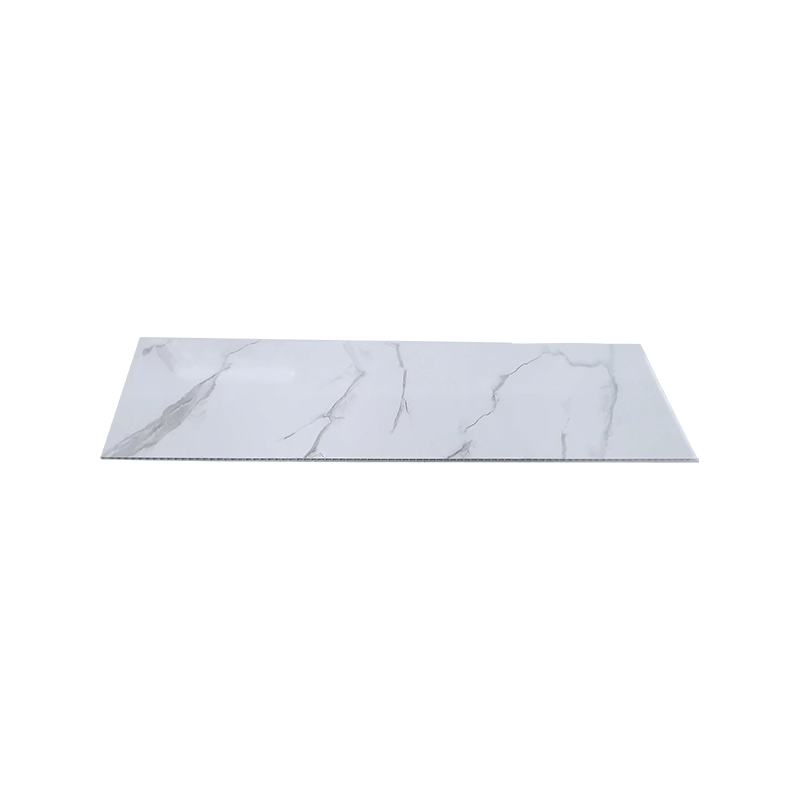
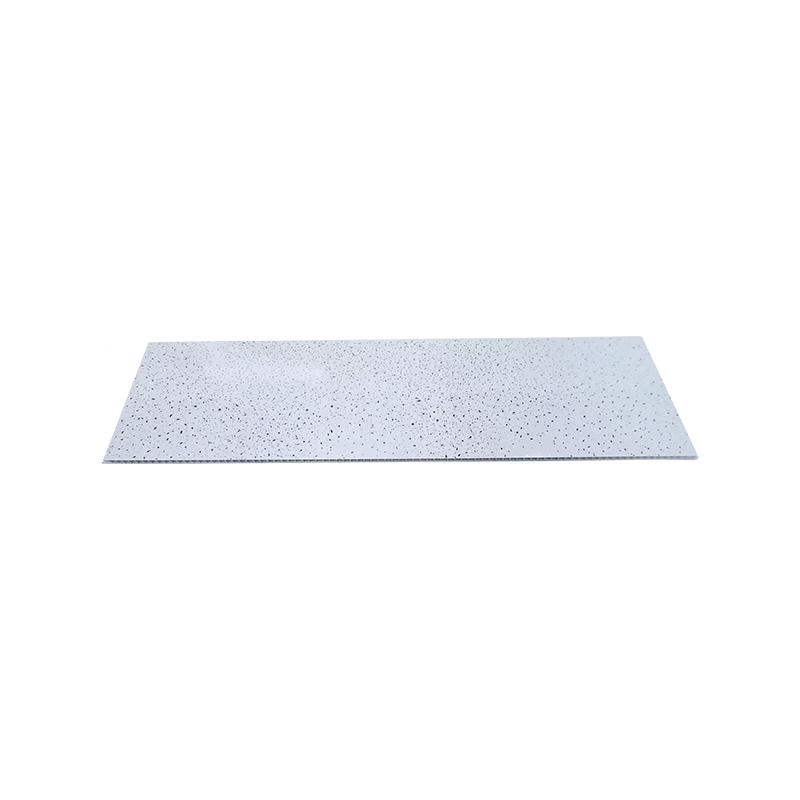
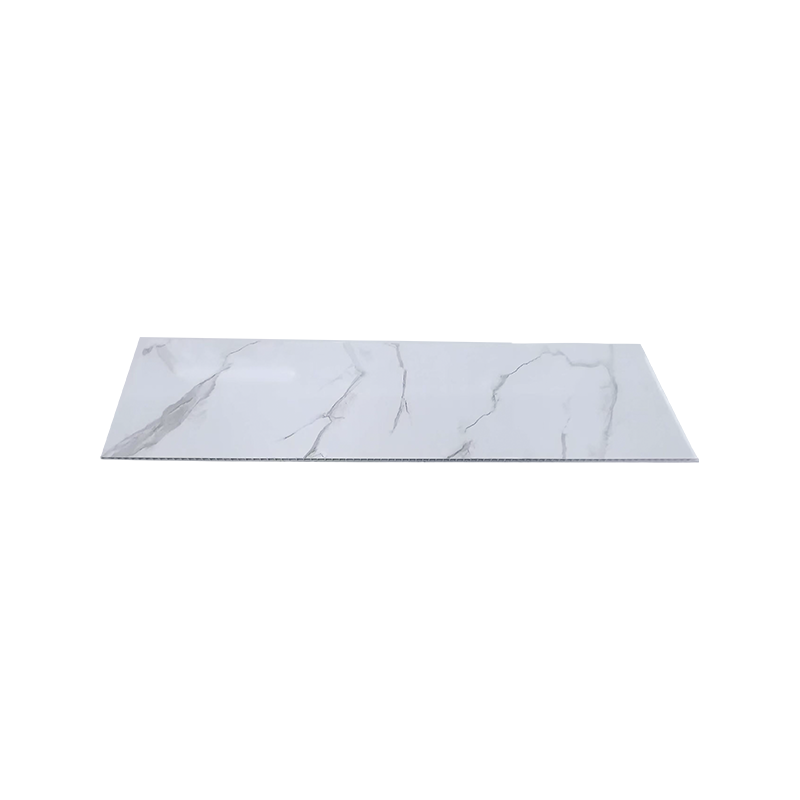 1000 x 10mm White Marble Effect PVC Wall PanelA wide 10mm PVC panel for continuous walls; check its gloss, edge finish and thickness against lighting and wall conditions.View Product →
What to inspect on a sample
- Compare two panels from the same batch, not only one cut piece.
- Check the marble pattern across a simulated seam before ordering.
- Confirm whether the surface is matte, embossed, glossy, or hot-stamped.
- Look at the cut edge and confirm which trim or sealant will cover it.
- Ask what the protective coating is and how the surface should be cleaned.
Measure Thickness Before You Compare Rigidity
Thickness affects rigidity, weight, edge appearance, fixing choice, and tolerance to uneven walls. Do not compare quotations that list only a nominal thickness. Ask the supplier to state the nominal value, the permitted tolerance, and the measurement method. Use a caliper at several points away from the edges. If thickness varies beyond the agreed range, joints may step, trims may not sit cleanly, and adhesive contact can become uneven.
A thicker panel can reduce the visibility of minor wall defects and improve edge stability, but it is not automatically better. Heavier panels need suitable adhesive coverage or mechanical fixing, and they may be harder to handle on ceilings or upper walls. Thinner panels can reduce load and suit renovation work where the substrate is already flat, but they may show substrate variation more readily. Match the thickness to the wall condition, panel width, joint layout, and expected impact, not to a simple “thicker is stronger” assumption.
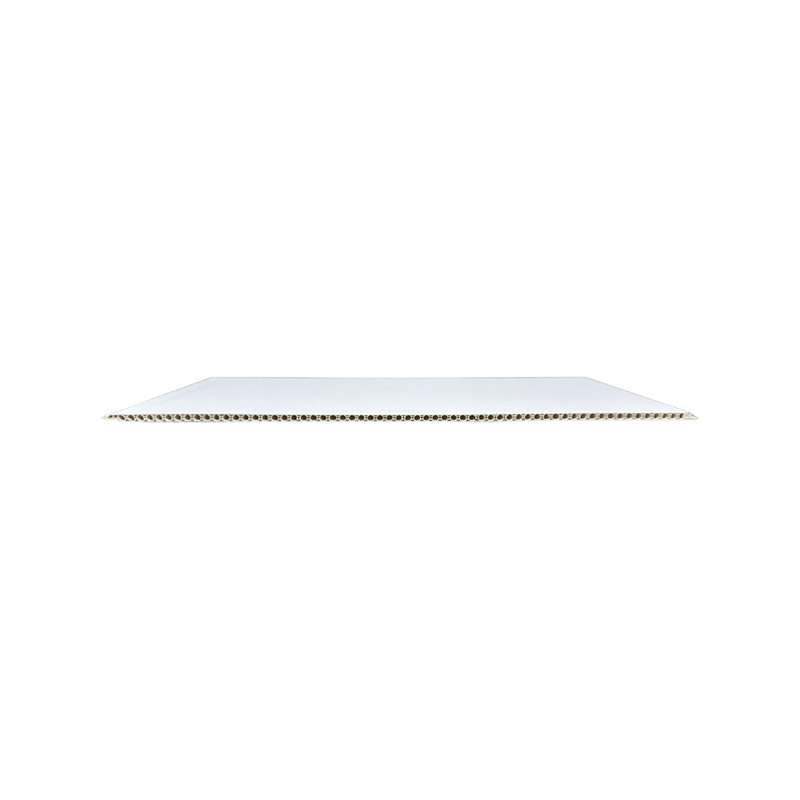
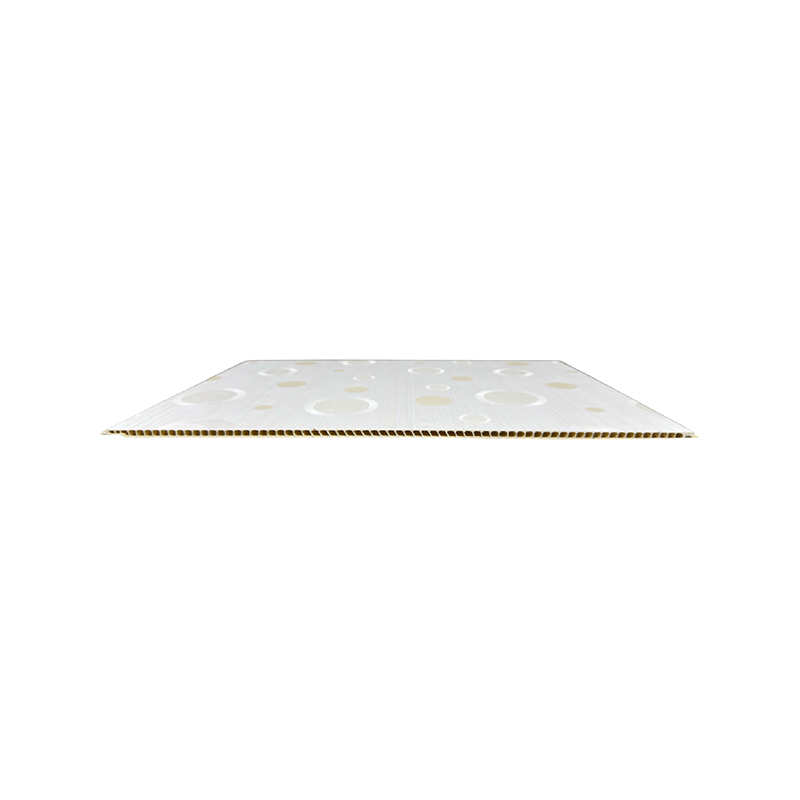 400 x 6mm PVC Wall Cladding Sheet for KitchensA 6mm, 400mm-wide kitchen wall cladding sheet; consider its rigidity, weight and joint detailing within a complete waterproof wall assembly.View Product →
| Thickness band | What it can change | What to verify |
|---|---|---|
| Around 6 mm | Lower panel weight, more flexibility, and greater sensitivity to substrate flatness | Measured thickness, adhesive coverage, joint support, and impact risk |
| Around 8–10 mm | Greater rigidity and edge stability, with higher weight and handling demands | Fixing design, wall load, cut edge, trim depth, and joint alignment |
| All thicknesses | Joint appearance, water path, and installation speed | Tolerance, batch consistency, edge sealing, pattern repeat, and packing protection |
Thickness questions for the RFQ
- What is the nominal thickness and the permitted tolerance?
- How and where should thickness be measured on the panel?
- What fixing or adhesive method is recommended for the substrate?
- How are cut edges treated at corners, openings, and end stops?
- What packing protects edges and faces during transport?
Test Waterproof Performance as an Assembly
PVC panel material is often selected for moisture exposure, but water resistance at the panel face does not prove that the wall assembly is waterproof. Water reaches behind panels at joints, cut edges, penetrations, bottom edges, and failed sealant lines. In bathrooms and shower areas, the substrate waterproofing and drainage details must be designed first. The panel, trim, sealant, and substrate then need to work as one system, not as separate items on a quotation.
Ask for the test method and conditions rather than accepting a general “100% waterproof” claim. Clarify whether the claim applies to the panel core, the coated face, the jointing system, or the completed installation. For a splash zone, sealed joints and suitable trims may be enough when the substrate is protected. For direct water spray, a PVC wall panel alone may not be suitable unless the joint detail, sealant, and backing are designed for that exposure. Cleaning chemicals and abrasion also matter, because a surface that resists water can still lose its appearance after repeated scrubbing.
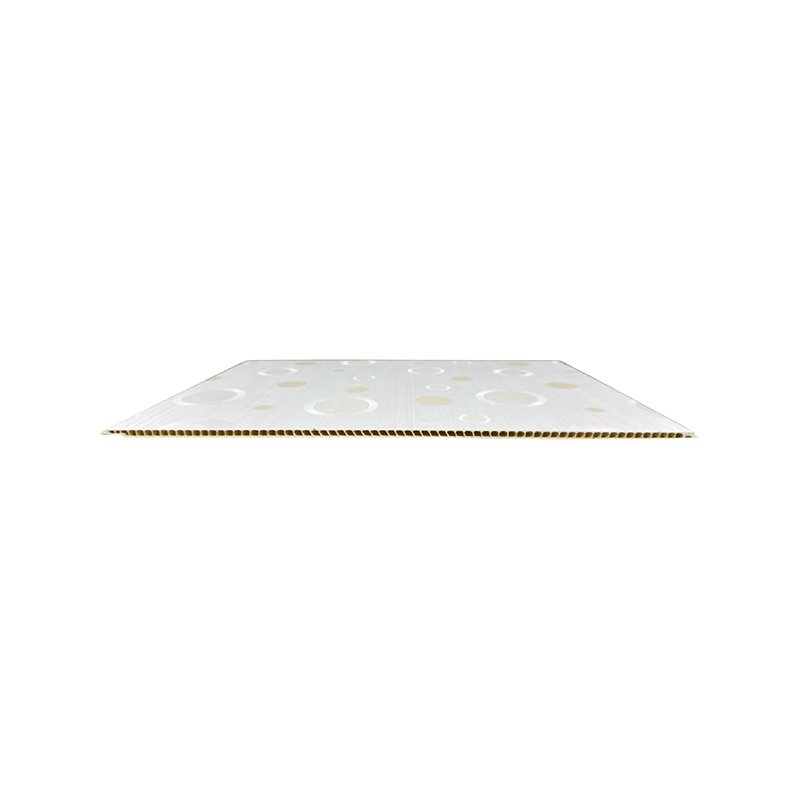
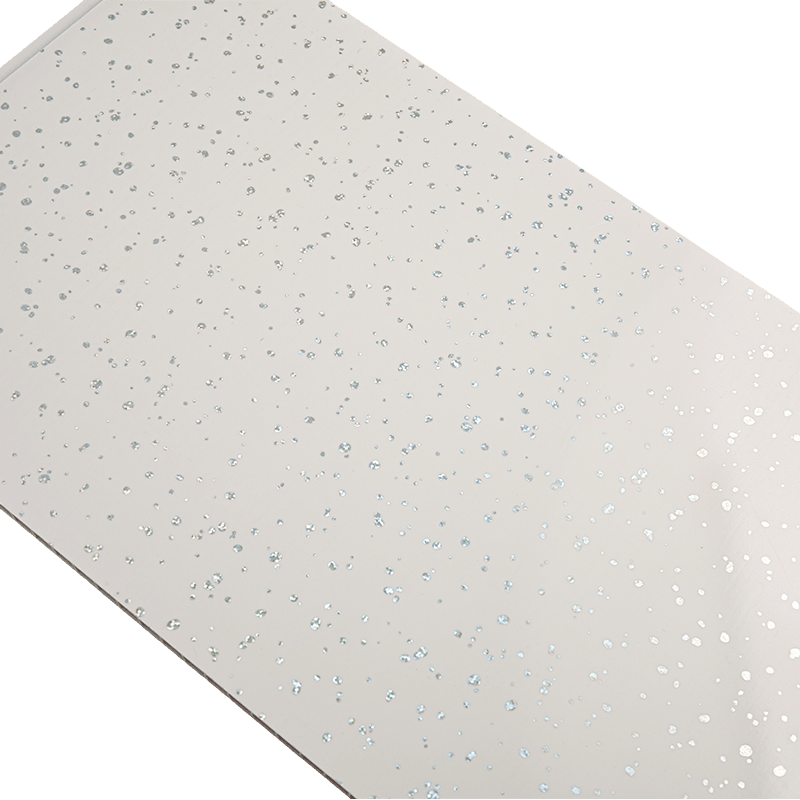 600 x 9mm PVC Wall Panel with Embossed SurfaceA 9mm, 600mm-wide PVC wall sheet with embossed texture; assess joint design and substrate protection for dry, splash or commercial walls.View Product →
Water-path checklist
- Check the face, back, and cut edges of the panel.
- Review vertical and horizontal joints, including movement at corners.
- Confirm sealant compatibility with PVC and the chosen trim.
- Verify substrate waterproofing, drainage, and ventilation.
- Confirm cleaning agents and abrasion limits with the supplier.
Match the Panel to the Room, Then Verify the Supplier
A dry feature wall, a bathroom splash zone, and a commercial corridor place different demands on a PVC marble wall panel. For dry areas, visual consistency and flatness may dominate. For wet areas, joint design and substrate protection matter more. For commercial walls, impact resistance, cleaning, and replacement consistency become part of the evaluation. Write these conditions into the RFQ so each supplier quotes against the same basis.
RFQ checklist
- Room type, substrate, and expected moisture exposure.
- Panel width, thickness, tolerance, and measured sample values.
- Surface finish, gloss level, pattern repeat, and batch control.
- Edge treatment, trim profiles, and joint layout.
- Sealant method, substrate preparation, and cleaning instructions.
- Sample approval step, batch retention, packaging, and delivery protection.
Illustrative Example: a buyer compares two quotations for a hotel bathroom feature wall. Both offer a marble-effect PVC panel. Quote A lists a nominal thickness but no tolerance or joint detail. Quote B includes a measured thickness range, pattern repeat, edge treatment, trim profile, and a sample approval step. Quote A may still be cheaper, but the buyer cannot compare installation risk or replacement consistency without the missing data. This is not a real project; it shows why the RFQ should force every supplier to provide the same information.
If the design depends on a nonstandard width, interlocking format, or trim match, confirm customization before ordering. Yicheng New Materials Co., Ltd. provides a customization route through its customization page; use it to confirm panel width, edge profile, and sample approval steps rather than assuming a catalogue size will fit.
What to Approve Before Production
Approval should be based on a physical sample and a written specification. Keep a signed sample and record the batch reference. Check the panel face, back, edges, and trim colour under the project lighting. Agree how thickness will be measured and what tolerance will be accepted. For wet areas, review the joint detail as a drawing, not a verbal promise. If the supplier cannot state a test method, tolerance, or jointing condition, treat the performance claim as unverified.
For the final quotation, send the room schedule, substrate condition, panel direction, joint layout, trim list, and sample requirements to the contact page. This lets the supplier quote a defined panel rather than a general “PVC marble wall panel”, and it gives you a clear basis for comparing samples, thickness data, and waterproofing details before production begins.
The Three Checks That Decide Approval
Evaluate surface design by viewing pattern, gloss, coating, and batch consistency at the intended scale. Evaluate thickness by measured value and tolerance, not nominal thickness alone. Evaluate waterproof performance by the complete assembly: panel, edges, joints, sealant, substrate, and drainage. A panel that meets all three checks for a dry feature wall may still be unsuitable for a shower, and a panel approved for a wet room may be unnecessary in a low-moisture corridor. Match the specification to the actual exposure and keep the approved sample as the reference for every later batch.
Recommended NEWS:
PVC Decorative Panels: Material Selection, Surface Finishes and Interior Applications
WPC Wall Cladding Guide: Material Performance, Surface Finishes and Selection Factors
WPC Grille Panel Guide: Design Options, Installation and Interior Applications
Waterproof PVC Ceiling Panels: Performance Requirements for Homes and Commercial Projects
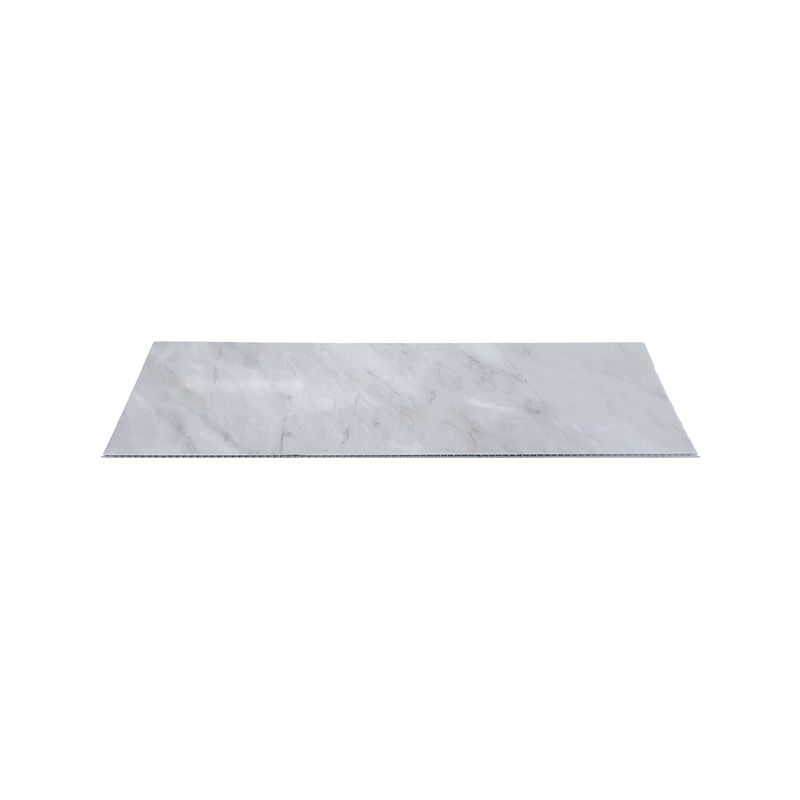
If you are interested in our products, please consult us
contact details
Address : The intersection of Yuanxi Road and Changyi Road, Yuanhua Town, Haining City, Zhejiang Province, China
Phone: (+86)15988398565
E-mail: boslonmaterials@gmail.com
products
quick link
Mobile terminal
Copyright © Yicheng New Materials Co., Ltd. All rights reserved.
Custom Interior Wall Cladding Panels OEM/ODM Manufacturers
